Frozen Floor in Tower Rush: How the Bonus Floor Works
Frozen Floor is one of the most unique mechanics in Tower Rush — a bonus that simply does not exist in other crash games. It is a "frozen floor" that effectively insures your bet at a critical moment in the round. This guide explains exactly how it works and how to get the most out of it every time it appears.

What Is Frozen Floor
During normal tower construction, one of the houses occasionally lands with a distinctive frozen texture — that is the Frozen Floor. The moment it activates, the current multiplier is permanently locked as a guaranteed minimum payout for the remainder of that round.
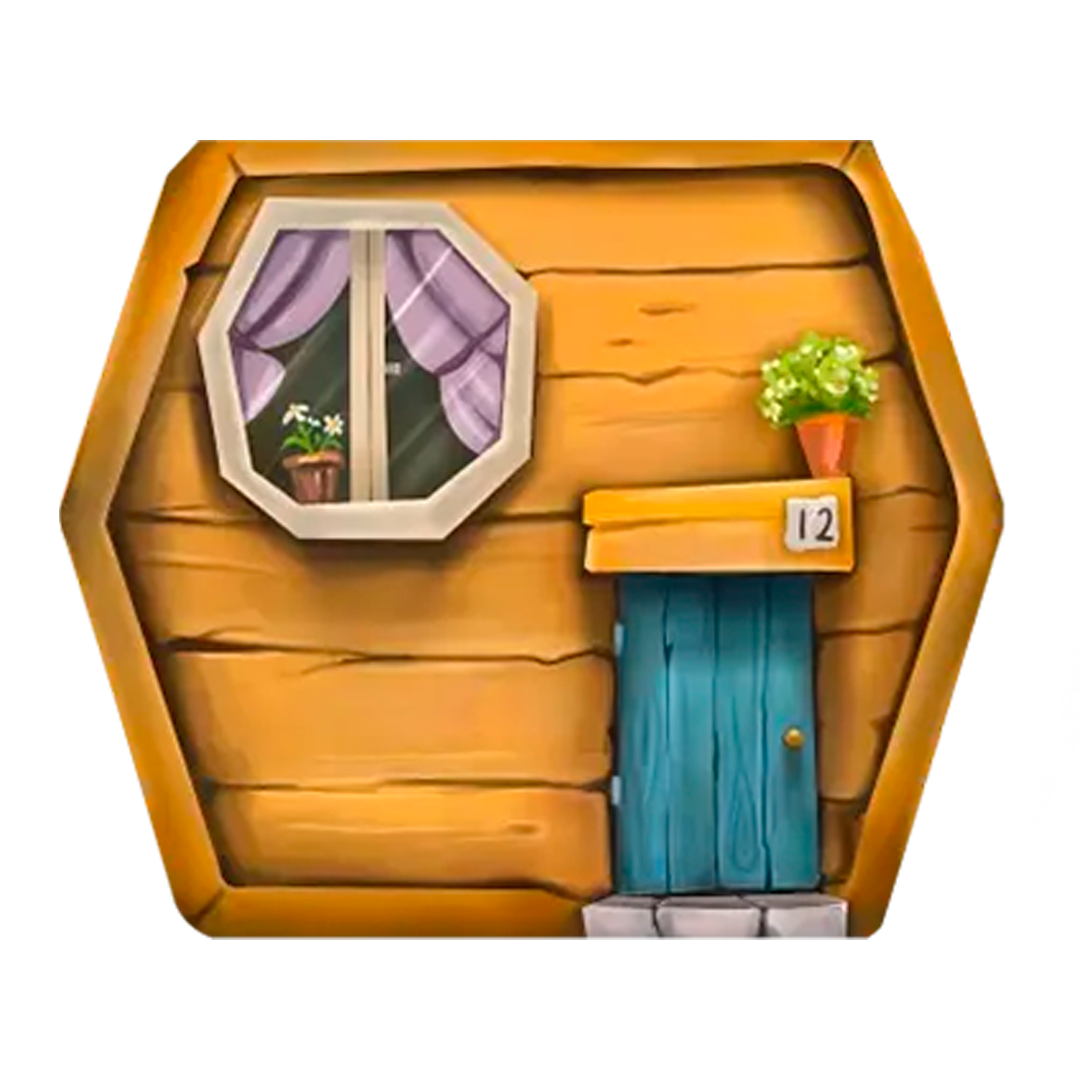
The key detail: if the tower collapses after Frozen Floor has activated, the game does not count the result as a loss. Instead, you receive the multiplier at which the Frozen Floor occurred — exactly as if you had pressed "Cash Out" at that precise moment. Your bet does not burn.
You can continue building and wait for a higher multiplier — Frozen Floor acts as a floor under your result. If you press "Cash Out" at a higher multiplier later, you collect that larger amount. If the tower collapses, you collect the locked minimum. Either way, you never walk away empty-handed once Frozen Floor has activated.
In plain terms
Think of Frozen Floor as an insurance policy for the round. It does not restart anything — it simply guarantees you a minimum payout. A tower collapse after activation means you still get paid at the frozen multiplier rather than losing your stake. This is what sets Tower Rush apart from Aviator and JetX.
How Often Does Frozen Floor Appear
Galaxsys does not disclose the exact frequency of Frozen Floor — it triggers randomly. In regular play it appears often enough to meaningfully shape your session strategy. You cannot predict which round will produce it, but when it does show up, knowing how to react is what separates informed players from the rest.
Frozen Floor can appear on very different floor numbers — sometimes extremely early (at x1.2–x1.5), sometimes at mid-range levels (x2–x3). This variability is actually the interesting part: an early Frozen Floor completely changes how aggressively you can play the rest of that round.
Strategy When Frozen Floor Activates
Option 1: Raise your target multiplier and wait
If you normally exit at around x1.5 and Frozen Floor activates at x1.2, you can comfortably wait until x2.5–x3 before pressing "Cash Out". Even if the tower falls immediately after the Frozen Floor, you collect the locked multiplier. Your downside is capped, your upside is open. This is the core strategic value of Frozen Floor.
Option 2: Play without a fixed exit point, using Frozen Floor as your anchor
A more experienced approach is to keep building with no predetermined exit, treating Frozen Floor as the signal to stay in longer. This requires composure and familiarity with the game's rhythm. The mechanic gives you genuine permission to be patient — use it.
Early vs. Late Frozen Floor: What Changes
Frozen Floor can activate on any floor — the second, the tenth, the thirtieth. It is not influenced by your bet size, how long you waited, or what happened in previous rounds. Each occurrence is fully independent.
Early Frozen Floor (low multiplier such as x1.1–x1.3) is paradoxically often the most valuable kind. The frozen payout is modest, but you now have full insurance to wait aggressively for x3, x5, or even higher. The risk of total loss is gone. You can sit back and let the tower grow.
Late Frozen Floor (high multiplier such as x3–x5 or above) is a welcome confirmation of an already-strong round. It adds confidence but changes the strategic picture less dramatically, since the round was already going well without it.
Early Frozen Floor at a Low Multiplier: How to Play It
Suppose Frozen Floor activates at x1.2. The instinctive reaction — especially for newer players — is to press "Cash Out" immediately now that protection exists. This is suboptimal.
The correct reaction is to revise your target multiplier upward. If your original plan was x1.5, reset your thinking to x3–x5. Your bet is shielded from a zero outcome: a tower collapse yields x1.2, a successful run to x4.0 or beyond yields a multiple of your stake. Frozen Floor gives you the best risk-to-reward ratio available within a single round — take advantage of it.
Example calculation
Bet: $5. Frozen Floor activates at x1.2. You wait for x4.0 but the tower collapses at x3.5. You receive $5 × 1.2 = $6 — a small profit instead of a loss. Had the tower reached x4.0 before you cashed out, you would have collected $20. The downside is protected; the upside remains fully open.
Frozen Floor Combined with Other Bonus Modes
Frozen Floor can appear in the same round as other bonuses. The strongest single-round combination occurs when Temple Floor triggers, the fortune wheel spins, and the wheel awards... Frozen Floor. The result is double protection in one round: the Temple Floor activated, and its prize was a guaranteed minimum payout. Extremely rare, extremely valuable.
Another powerful pairing is Frozen Floor plus Triple Build. Three extra pink bonus floors land on an already-insured tower, stacking multiplier value on top of a guaranteed minimum. These rounds represent the highest-payout scenarios Tower Rush offers. They are rare — but this is exactly when disciplined patience pays off.
Understanding how the multiplier itself grows floor by floor gives additional context for these combinations — see the multiplier mechanics guide for the full picture.
What Frozen Floor Does NOT Do
It is equally important to understand the limits of this mechanic:
- Does NOT restart the round or the game
- Does NOT reset the multiplier to zero
- Does NOT guarantee a high multiplier — it only prevents a loss at the current level
- Does NOT apply retroactively — if the tower already collapsed before Frozen Floor activated, it has no effect
- Does NOT influence when the tower will collapse next
The frozen multiplier is a floor, not a ceiling. The tower might fall on the very next floor and you collect a modest gain. Or it might climb to x10 and you walk away with a substantial win. Frozen Floor eliminates the zero — it does not predict or control what happens above it.
Frozen Floor vs. Auto-Cashout
Tower Rush has only two controls: "Build" (keep going) and "Cash Out" (collect winnings). There is no auto-cashout button in this game. This is intentional — the manual decision-making is part of the design, and Frozen Floor works within that framework. When the frozen texture appears, you consciously decide how long to continue building. The game does not automate that choice for you.
For guidance on when to manually press "Cash Out" in general rounds, the Cash Out strategy article covers exit points, multiplier targets, and bankroll discipline in detail.
See Frozen Floor in Action
Play Tower Rush in demo mode — Frozen Floor is fully active with no registration required. Switch to real money with promo code 1WINBOST for a welcome bonus up to $1,500.
Try Tower Rush on 1winFrequently Asked Questions
Does Frozen Floor appear in every round?
No, it is a random trigger. Frozen Floor activates unpredictably in certain rounds. You cannot plan your session around it appearing, but knowing how to use it when it does is key to maximizing each occurrence.
Can I receive less than the frozen multiplier?
No. Frozen Floor guarantees a minimum payout at the locked multiplier. If the floor froze at x1.3, you will receive at least x1.3 even if the tower collapses immediately after activation. The frozen multiplier is an absolute floor for that round.
Are Frozen Floor and Temple Floor the same thing?
No, they are different mechanics. Frozen Floor locks the current multiplier as a guaranteed minimum payout. Temple Floor is a separate bonus mode that triggers a fortune wheel animation, which can award either a Frozen Floor activation or a random bonus multiplier from x1.5 to x7.
Which is more valuable — early or late Frozen Floor?
Strategically, an early Frozen Floor is often more valuable. It lets you take more risk and wait for higher multipliers without fearing a total loss of your bet. A late Frozen Floor simply confirms an already-favorable round but changes your strategy less dramatically.